

img

You find yourself by your car, in possession of a cord that you have in your hands while wondering whether running a cord over wet grass is okay to provide power for your pressure washer.
Perhaps you've done this before, but now, when you see the cord, it's either too warm to the touch or has tripped a breaker when you tried plugging in another device. Such uncertainty and fear that all it takes is a couple of rainy days until things get worse is precisely why this topic needs to be addressed.
There is an assumption that many people do not even consider the kind of cord that they pull from their garage. The cord is coiled, it seems alright, and it gets plugged without any consideration of its rating. This carelessness causes most of the problems.
This guide will cover the meaning of those letters on your cord, compare SJTW to SJOOW, and what can be used outdoors safely.
Knowing these designations helps one comprehend all their outdoor extension cord choices, and having this understanding will help you avoid all the common outdoor errors.
Selection of the right outdoor extension cord is the first step to using outdoor power properly, and all the next sections will be based on this.
An outdoor extension cord is not just any cord that is thick or black in color. It is made from a jacket that is specially designed to withstand the sun, moisture, and temperatures that may damage the jacket of an indoor-rated cord.
This is important since indoor-rated cords have thinner insulation for use in dry and stable environments. Exposing the same to the elements outdoors will destroy it through sun damage alone after a season.
Therefore, what does W mean on an extension cord? The simple answer is that W means the cord is weather-resistant after testing and approval for outdoor usage.
Failure to have W marked on the jacket of a cord means it cannot be used outdoors even if it seems like a thick cord. The manufacturer marks these letters on the jacket of the cord for good reason – they should always be checked during purchase.
The next time you are buying a cord, take some time to look at the marked letters instead of making assumptions based on the appearance of the cord. A slim cord with the right rating will perform much better than a thick one without it.
This is one of the most misleading comparisons when it comes to cords and cables questions. Though both of them have the letters "S" (flexible service cord) and "J" (junior-rated insulation) in common, everything else about their names tells quite the opposite story.
SJTW meaning, fully spelled out, looks like this: Service, Junior, Thermoplastic, Weather-resistant. It is a rather universal protective cable covering material, appropriate for most outdoor jobs.
But SJOOW, which stands for Service, Junior, Oil-resistant Outer Jacket and Inner Insulation (double "O"), is more than that. First of all, it is oil-resistant, which makes it quite durable in garages and on construction sites where oil leakage occurs.
Here's a quick side-by-side breakdown of how the two compare:

That's why if you need a cable for a generator, compressor, or other gas engine-operated device, SJOOW is your best choice. And don't forget about extra flexibility in cold weather.
Also, this cable's jacket is based on more flexible rubber and not on thermoplastic materials used for SJTW. This means that SJOOW is able to retain its flexibility in lower temperatures, while SJTW may become stiff at low temperatures.
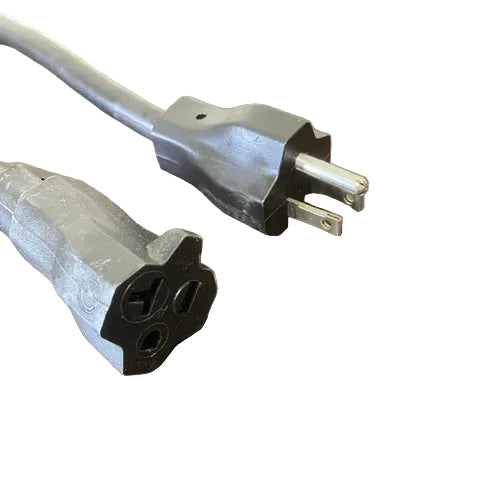
Can outdoor extension cords get wet? Yes, the right outdoor cord can handle rain and damp grass much better than the indoor one, but the term "weather resistant" does not mean "waterproof."
The main problem is not the jacket getting wet, but water touching the connections, plugs, sockets, or any damage in the cord.
What happens if rain gets on the extension cord with exposed or damaged insulation? The answer is obvious - water creates a route for electricity, which leads to a risk of shock, tripped breakers, or, in the worst-case scenario, arcing and fire.
That is exactly why using the rated cord with ground-fault protection is so important. An extension cord with an inline GFCI is a safety device that interrupts electrical power the second the ground fault occurs; it is especially useful near sprinklers, swimming pools, or wet grass.
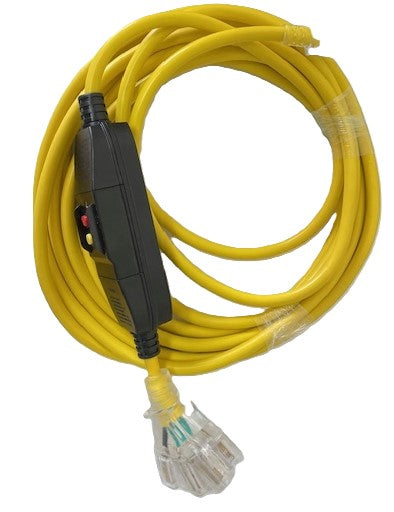
It should also be mentioned that even a rated extension cord must not be placed in standing water or submerged puddles. The weather resistance protects from rain and splashes, not from being submerged, so after the storm, it is high time to unplug the cord and store it inside.
Sometimes, depending on the rating of the cord, it is possible to use it outdoors during winter, because at low temperatures, the cord does not become fragile. But using it outdoors permanently is quite another matter.
Under the influence of continuous sunlight, the jacket becomes more fragile after several months, even though it is highly resistant to weather conditions. And when snow, ice, and thawing occur, the connections become exposed to water penetration over time.
So, is it safe to run the extension cord outside permanently?
According to manufacturers and electricians, this should not be done. Extension cords, as you see, are designed for temporary use only.
If you require power in the same outdoor location on a daily basis, then it is time to have an electrician look into getting you something more permanent, rather than depending on a cord every day.
The seasonal factor also comes into play. If your cord is used consistently during the fall and winter season, whether it be for a pump, a heater, or your holiday decorations, make sure that you check it more often than during other times of the year.
This warning is substantiated by research findings. According to a 2024 study published in Cogent Engineering, researchers analyzed how households used their extension cords in several hundred houses. The majority of consumers were reported to have low awareness about cord ratings and were prone to overloading cords on a regular basis, which greatly increased the risk of fire. In addition, the USFA states that in 2021 there were around 24,200 building electrical fires in homes, leading safety agencies to advise people against the use of extension cords with major appliances because of the chances of a fire breakout from overheating.
However, not all outdoor tools require the same outdoor extension cords. The best outdoor extension cord for Christmas lights should be lightweight and should be an SJTW cord since the string lights require lower amps and flexibility.
On the other hand, if you want to know how to recommend an outdoor cord for a pressure washer, then you have to look for a heavy gauge with an oil-resistant feature. A pressure washer draws more amps and requires a cord with heavy-duty jacketing.
An example of a high-quality extension cord would be the Heavy Duty 10/3 SJOOW Extension Cord, with its tough oil-resistant rubber jacket and increased amp capability for heavy-duty tools such as a pressure washer, generator, and workshop.
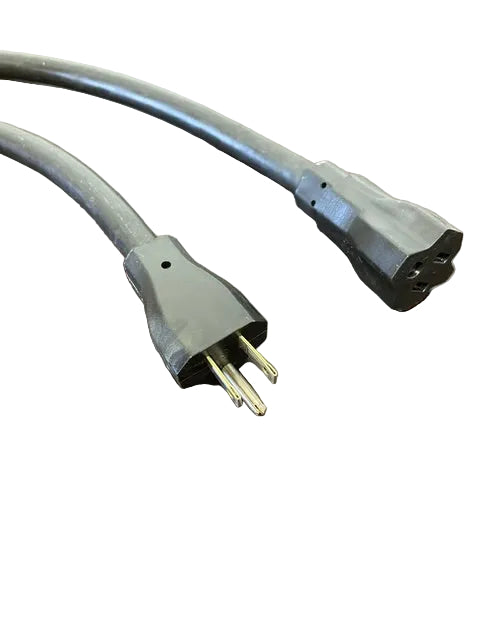
Choosing the right type of outdoor cord to match the type of tool is critical because it will ensure the safety of the cord when used outdoors.
In between these two extreme requirements are other tools, such as hedge trimmers, large-scale string lights, or holiday inflatables, which can use medium SJTW cords provided the distance from the outlet does not require excessive stretching or coiling of the cord.
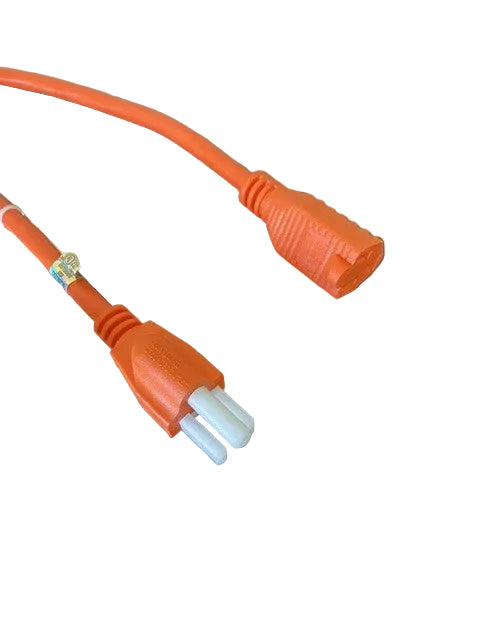
Weather rating will tell you if the cord is suitable for outdoors, while gauge and amperage will tell you if it is suitable for your electrical needs.
The gauge is the wire diameter, and contrary to intuition, the smaller number means the bigger diameter. So, for example, 12-gauge cord safely supplies more current than a 16-gauge cord of the same length. This is a very important point for devices with a high draw of electricity.
When a cord does not have sufficient gauge for the tool that you try to use with it, the wire overheats when under load. And eventually, after some time or even just during one use with high-draw devices, this overheating becomes a serious threat of fire, regardless of how suitable for the weather the cord is.
The length of the wire is also significant. As longer wires have greater voltage drops, longer outdoor cords require a thicker gauge than shorter ones performing the same task.
Outdoor extension cord safety consists of several practices that need to be implemented every time an individual connects his or her cords outdoors.
It's simple once you know what the letters really mean. Select an extension cord that is rated for outdoor use, take the distinction between SJTW and SJOOW into account, ensure that the proper gauge matches the tool's draw in amps, and take "weather-resistant" to mean moisture-resistant, not waterproof.
If you want to upgrade your electric arsenal, here are a few quality products that you can browse from our collection.
No, due to constant exposure to sunlight and moisture, the cord gets damaged.
No, they have no protection against the environment and cause shock and fire hazards.
No, such installation is not allowed, as extension cords are temporary cables.
You need an outdoor cable, elevate connections, and provide GFCI protection.
SJTW cords are used outdoors, while SJOOW cords offer additional oil resistance.
{"one"=>"Select 2 or 3 items to compare", "other"=>"{{ count }} of 3 items selected"}
[title]
[message]Love it? Add to your wishlist
Your favorites, all in one place. Shop quickly and easily with the wishlist feature!