

img

You buy the biggest and the most expensive extension cable in the shop, thinking it is a safe choice, only to discover later that you had no idea whether you needed it or not. Does this ring any bells?
Extension cable marking is of little help too. Terms such as 10/3, amp values, and gauge values are used without explanation for the buyer. As a result, the majority of consumers either pay extra for an over-capacity cable which won't be loaded up to its full capacity, or buy an under-powered cable that will struggle under load.
The truth lies somewhere in between. Some jobs require a 10-gauge wire, but many others can be done with a less heavy wire. This knowledge can save you money and prevent your devices from overheating.
Here we explain what 10/3 means, how it can be used, and what kind of jobs require this type of cable.
Every 10/3 extension cord has a label that may look simple but says all about the construction of this cord. So, the first digit, 10, stands for the wire size. And the second number, 3, is the number of conductors used in this wire.
And what does 10/3 mean on an extension cord? It means that you deal with 10-gauge copper wire and 3 wires in total: hot, neutral, and ground wires. And this last one is essential as it gives you protection from electrical shock in case of failure.
And here, compare 10/3 wire with 10/2 wire. As you know, the latter has no ground conductor at all and is used mainly for fixed applications of cables. So, if you have to explain 10/3 vs 10/2 wire to somebody, here is your explanation: 10/3 gives you extra protection from electrical shock, as it grounds the equipment, while 10/2 does not.
The gauge, on its own, is a reverse numbering system that catches many buyers off guard. In general, the lower the gauge number, the thicker the wire. This means that a 10-gauge wire is thicker, and therefore has greater current capacity, than a 12- or 14-gauge wire of equal length.
While thickness is an important aspect, the material of the jacket is just as important in terms of the actual performance of the wire. Wires that are SJEOW and SJOOW feature oil-resistant jackets that have been created to maintain flexibility even when frozen, something that should be noted when determining a length and cost.
A physical comparison between different cords can also be very helpful, wherever possible. There is a visible distinction between a 10-gauge cord and a 14- or 16-gauge cord of the same length – a 10-gauge cord is noticeably heavier, and this is not just a superficial distinction. Since there are thick copper wires in the former, there is more space available for the current flow, meaning less resistance and less waste of energy in the form of heat generation.
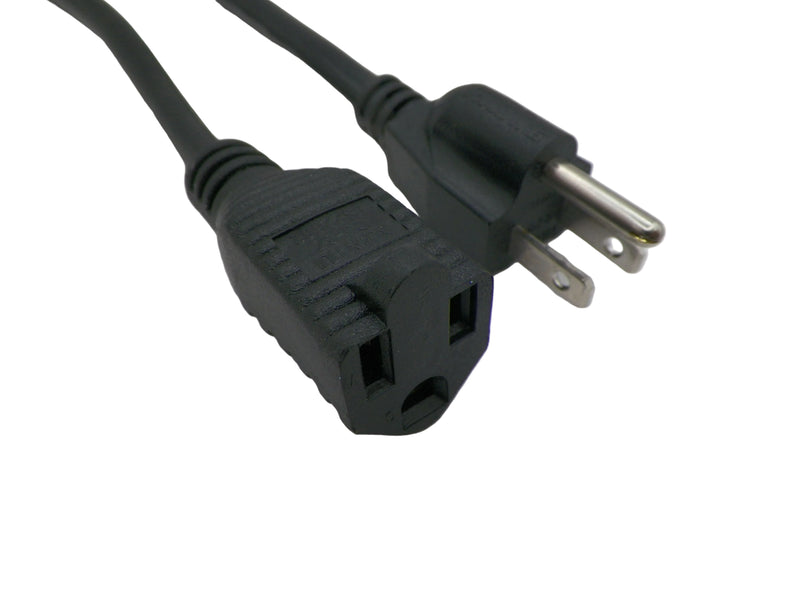
Amperage is a measurement of the actual amount of current that travels in the cord while supplying energy. It refers to the quantity of electricity flowing in the wire, like gallons per minute measure water in a pipe.
All 10-gauge cords come with a 10-gauge cord amp rating that specifies the amount of current the cord can supply without getting overheated. All standard 10/3 cords have a 30-amp extension cord rating, putting them above 14- and 16-gauge cords.
If you want to know how many amps can a 10-gauge extension cord handle, then the answer is 30 amps for shorter lengths of cable. But the amperage of the cable is not constant because amperage decreases when the length of the cord increases due to increasing resistance.
And that is the reason why it is impossible to consider thickness alone in this case. The 10-gauge cord is used to transmit high amperage over an extended distance; hence, it is the preferred choice over thinner wires when dealing with generators, RVs, and construction sites.
It is important to bear in mind that the amperage stated on a wire is under ideal conditions. These include average temperatures, the cable lying out straight, and the absence of other loads except for one that is connected to it. When you overload the wire, coil it up, and expose it to summer sunlight, then the safe amperage of operation goes below what is indicated on the wire.
The difference between a 10/3 vs 12/3 extension cord becomes immediately apparent once you compare them side by side. They both have thick and durable construction but operate in different capacities.
Here's an approximate guide based on 120V circuits:
It is clear from this chart that 10/3 is not automatically better in all cases. This type of cord has more ampacity than 12/3, and that makes a big difference in cases where you use generators and/or RVs, but otherwise, this difference does not matter at all because you do not use such high capacity.
The length of the cord plays an important role in this comparison as well because a 12/3 cord may work perfectly fine at 25 feet, whereas it will fail completely when you plug it into the same equipment at 100 feet.
Even price and ease of use vary. The price per foot for a 10/3 cord is higher than for a 12/3 cord, and because of the greater size of the wire, it is much heavier to roll up and transport. If you don’t need the 12-gauge wire for your application, it’s just plain unnecessary to pay for it.
Here is where people tend to make mistakes of overbuying or under-buying. Synchronization of the size of the wire with its practical application takes care of these issues.
If you're looking for reliable generator and cold weather power, check out the 50FT Nema 5-15P to Nema 5-15R Cold Weather Extension Cord, 10/3 SJEOW, 30A/125V that features a flexible TPE-rubber jacket that remains flexible in sub-freezing weather.
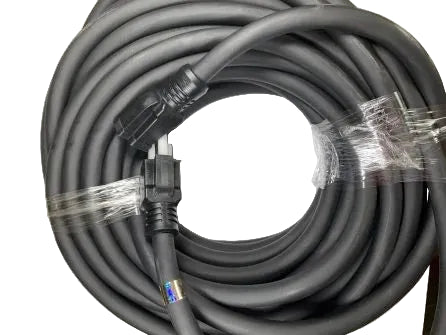
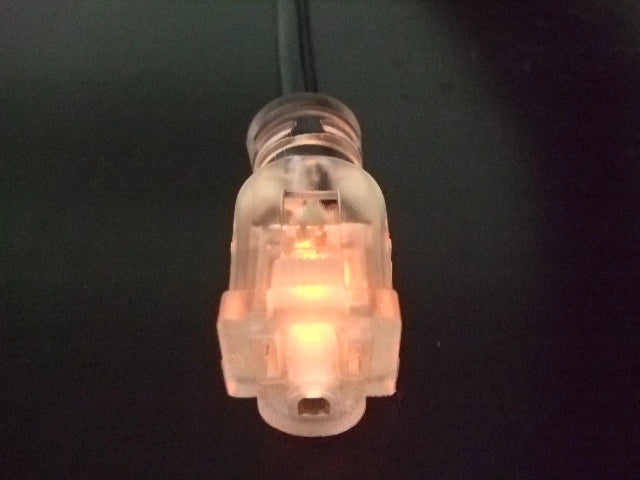
In cases where it is necessary to have visibility during high amperage runs, the 25FT Nema 5-15P to Nema 5-15R with Lighted End Cold Weather Extension Cord, 10/3 SJEOW, 30A/125V combines the same heavy-duty 30-amp construction but also includes lighted ends for better visualization of power when working with compressors and heavy equipment in low lighting conditions.
Peer-reviewed research conducted in 2024 revealed that proper selection of gauge in accordance with actual load and distance was directly associated with a decreased number of overheating cases.
A proper gauge cord still requires treatment to do its job right. There are a number of tips that come in handy in this respect.
In accordance with the statistics on safety gathered by the Electrical Safety Foundation International, there are thousands of electrical fires in homes caused by extension cords every year, and using the right gauge for the required current is one of the best methods of minimizing the danger, especially for high-amp devices such as generators and power tools.
The choice of a 10/3 extension cord is all about sizing according to actual amp usage and actual length, and not just going with the biggest one due to precaution. Extra capacity is beneficial for generators, RVs, and heavy-duty tools but is rarely required for anything else.
The next time you have to purchase an extension cord, take note of your tool's actual amp draw and the actual length you need. This one tip can help save you money and hassle both ways.
Also, if you are interested in buying the best-in-quality extension cords and other electrical appliances, we invite you to browse our range here.
This shows that the cable contains 10-gauge wires with 3 conductors, including hot, neutral, and ground.
It is ideal to use in cases where there are generators, RVs, and high-draw devices with a rating of 20 amps or more.
It can be used in such situations, but the cables are often too bulky for low-draw applications like light bulbs and other small devices.
Most 10/3 cords can carry 30 amps of power at shorter distances.
Usually up to 100 feet.
{"one"=>"Select 2 or 3 items to compare", "other"=>"{{ count }} of 3 items selected"}
[title]
[message]Love it? Add to your wishlist
Your favorites, all in one place. Shop quickly and easily with the wishlist feature!