


PDUs and power strips are electrical terms you’ll come across quite often, especially if you work in industrial centers. But what do they mean, and why is it important to distinguish between them?
This article shall attempt to address those questions.
We’ve prepared a definitive comparison between PDUs and power strips to help you choose the right option.
Introducing PDUs and Power Strips

PDU stands for power distribution unit. It’s an electrical device with multiple outputs that distributes power, usually to servers and other IT equipment.
On the other hand, a power strip is an electrical device consisting of a flexible cord with a plug on one end and one or more sockets on the other.
Similarities Between PDUs and Power Strips
Power distribution units and power strips share one fundamental similarity - both devices are designed to let you connect multiple electrical appliances simultaneously.
PDUs and power strips also rely on extension cords. Although they provide multiple outlets for plugging several pieces of electrical equipment, you need an extension cable to connect each appliance to the power supply.
Moreover, PDUs and extension cords have an inlet and several outlets. The inlet is typically a power cord, while the outlets are a series of sockets or ports.
Major Difference Between PDUs and Power Strips
The primary difference between PDUs and power strips is their designated use environments.
PDUs are typically used in industrial places. These devices help to stabilize the power supply and minimize electrical accidents in workplaces that depend heavily on electricity, such as data management centers. They’re suitable for connecting rack-mount equipment, such as IT servers, LCD drawers, and network switches.
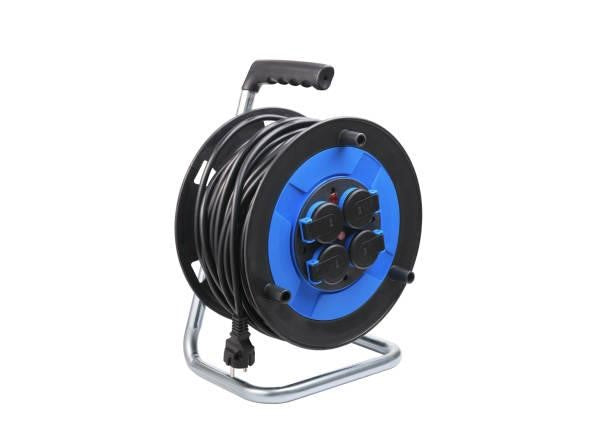
PDUs are meant for industrial use, making them equally suitable for weather-proof cables. Connecting your PDU to an outdoor extension cord can help to extend its longevity.
In contrast, power strips are typically designed for use in residential homes, regular offices, and shops. Common equipment you can connect to a power strip include home entertainment systems, kitchen appliances, lighting fixtures, and desktop computers.
Other Differences Between PDUs and Power Strips
Physical Differences
Most power distribution units are made of steel, while power strips are typically constructed from plastic.
When it comes to appearance, PDUs are mostly available in vertical 0U configurations. The configurations may be mounted to the rear of a rack without consuming significant rack space or in 1U /2U horizontal 19-inch rack mount spaces.
In comparison, power strips are almost always rectangular blocks and don’t come with specific mounting guidelines. Regardless of whether you’re using an indoor or outdoor power strip.
Another physical distinction between PDUs and power strips is the number of outlets. PDU outlets usually range from 4 to 48, while power strips have between 2 and 8 outlets.
Functional Differences
Both PDUs and power strips may feature NEMA receptacles and plugs. A noteworthy mention is the popular 5-15P. NEMA 5-15P is basically a 3-wire, 2-blade plug rated for 15 amperes. The “P” reference in the name stands for ‘plug,’ implying that it’s compatible with a 5-15R (receptacle).
However, PDUs come with domestic and international-grade inlets and outlets, such as IEC 60309 and IEC C13/C19, respectively. Such features are typically missing in power strips, which only have country-specific inlets and outlets.

Below are other core functional differences between PDUs and power strips;
1. Gauge Ratings
The conductor wires used in most power strips have a gauge rating of 14 AWG, making power strips suitable for medium-duty appliances. That’s in contrast to PDUs, whose conductors come in multiple gauge ratings from 14 AWG to 6 AWG.
PDUs provide better flexibility regarding the types of appliances they can serve. You can use these systems with a heavy duty extension cord without worrying about electrical shocks or explosions.
2. Voltage Ratings
Voltage rating is a critical factor when buying and using electrical appliances. One of the common power strip mistakes is to connect high-voltage appliances to low-voltage power strips.
The significance of matching voltage ratings also applies to power distribution units.
Power strips typically provide 110V/208V /230V single-phase power, ideal for connecting standalone residential and commercial properties. In comparison, PDUs can support 208V/ 400V three-phase connections for heavy-duty industrial applications.
Safety Differences
There are several safety features to consider when shopping for power strips and PDUs, including surge protectors. True to its name, a surge protector is a safety device cushions electrical appliances against damage due to power surges.
Many power strips come with surge protectors. Investing in a surge protector power strip can help safeguard your precious appliances from surge damage. Just read a comprehensive surge protector vs. power strip comparison to distinguish between these two commonly confused items.
On the other hand, PDUs usually don't have surge protectors. Instead, they come with overload protectors that shut off the power supply when a predetermined current limit is exceeded.
Besides, PDUs usually come with industrial-grade resettable fuse or MCBs (magnetic circuit breakers). These additional features allow you to plug different power cords into the system despite their gauge and voltage ratings. However, both a fuse and MCB are conspicuously missing in power strips.

Wrap Up
PDUs and power strips may both serve your electrical needs, depending on what you’re looking for. It’s important to familiarize yourself adequately with these essential electrical components before picking either option.
